


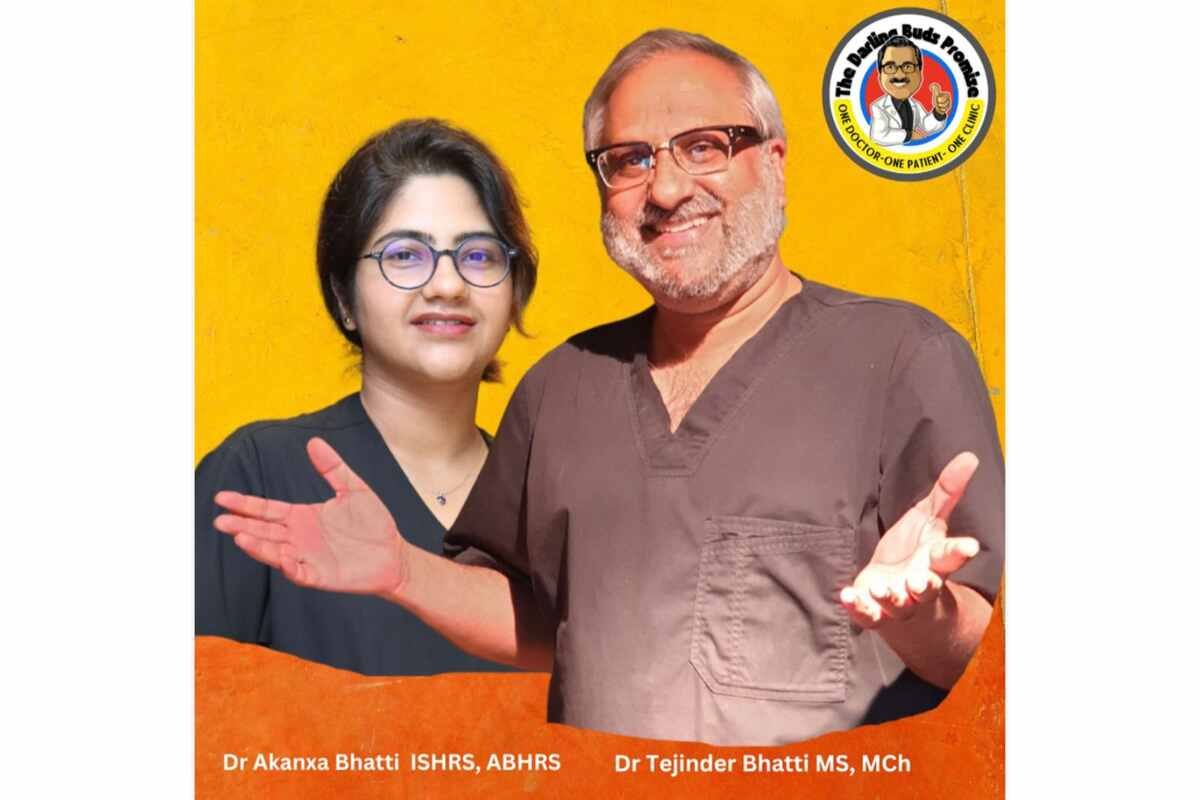
India’s hair transplant industry has become increasingly competitive over the last few years. Clinics across major cities now advertise faster procedures, discounted packages, and same-day transformations. But according to Mumbai & Mohali based hair transplant surgeon Dr. Tejinder Bhatti, the long-term success of a hair transplant depends less on procedure volume and more on careful surgical planning.
Doctors in the field say patients today are more aware of the risks linked to rushed or poorly managed surgeries. Discussions around unnatural hairlines, donor damage, and failed transplants have become more visible online, leading many people to research clinics more carefully before undergoing treatment.
As a result, industry experts believe the conversation around hair restoration is slowly moving away from quantity-focused procedures toward medically supervised and personalized care.
Younger Patients Are Seeking Treatment Earlier
Hair restoration specialists say one of the biggest changes in recent years is the age group seeking treatment. Earlier, most patients considered surgery after significant hair loss. Today, many people in their late 20s and early 30s are exploring hair restoration options.
According to experts, social media visibility and professional appearance pressure have contributed to this shift.
However, surgeons also warn that younger patients require more careful long-term planning because hair loss often continues over time.
Dr. Bhatti says aggressive transplantation at an early stage can create future problems if donor reserves are not managed properly. Hair transplant experts note that donor hair is limited, which means every procedure must account for possible future hair loss progression.
Corrective Cases Continue to Increase
Doctors in the field say corrective hair transplant procedures are becoming more common across India.
Many patients seeking repair surgeries report issues such as unnatural density, visible scarring, patchy growth, or overharvested donor areas after previous procedures.
Hair restoration specialists explain that correction surgeries are often more difficult because damaged donor areas leave fewer options for repair.
According to experts, one of the major reasons behind this trend is the growth of high-volume clinics where multiple surgeries are performed simultaneously.
Medical professionals say excessive delegation during surgery can affect graft survival and implantation quality.
Direct Surgeon Involvement Gains Attention
One of the reasons Dr. Bhatti’s work continues to attract attention is his focus on doctor-led procedures.
His “One Patient. One Doctor. One Clinic.” approach has remained central to his practice for more than two decades. Instead of operating several surgeries at once, the treatment model focuses on controlled surgical planning and direct involvement during key stages of the procedure.
Hair restoration experts say graft extraction, implantation angles, and hairline design require both technical precision and aesthetic judgment.
According to specialists, patients today are increasingly asking who performs the actual surgery rather than focusing only on clinic branding or advertising.
Darling Buds Clinic Emphasizes Long-Term Approach
Dr. Bhatti’s work is associated with Darling Buds Clinic in Mumbai and Mohali.
Industry observers say the clinic has developed a reputation for detailed patient evaluation and realistic surgical planning. Consultations reportedly involve assessment of donor capacity, hair loss progression, and long-term suitability before treatment decisions are made.
Hair restoration specialists say this type of planning is important because every patient requires a different approach based on age, hair quality, and pattern of loss.
The clinic also receives patients from abroad looking for doctor-performed procedures and medically supervised care.
Natural Hairlines Now Define Quality
Experts say modern hair transplantation is no longer judged only by graft count or density.
Patients now expect hairlines that look natural under normal lighting, close interaction, and high-definition video. According to surgeons, overly aggressive or poorly designed hairlines can appear artificial over time.
Dr. Bhatti has become known for conservative hairline planning aimed at maintaining facial balance and preserving natural appearance as patients age.
Hair restoration experts say natural design has become one of the biggest factors separating experienced surgical work from mass-volume cosmetic procedures.
Long-Term Results Matter More Than Immediate Transformation
Specialists say patient awareness around long-term outcomes has also increased sharply.
Instead of relying only on immediate after-surgery photographs, many individuals now look for long-duration patient follow-up and real growth timelines before selecting clinics.
Dr. Bhatti has often emphasized long-term donor management and realistic expectations during consultations.
According to experts, the future of hair restoration surgery will depend heavily on transparency, ethical planning, and doctor-performed hair transpalnt surgery rather than aggressive cosmetic marketing.
As India’s hair transplant industry continues to grow, specialists believe patients will increasingly prioritize quality-focused surgical care over high-volume procedure models.