


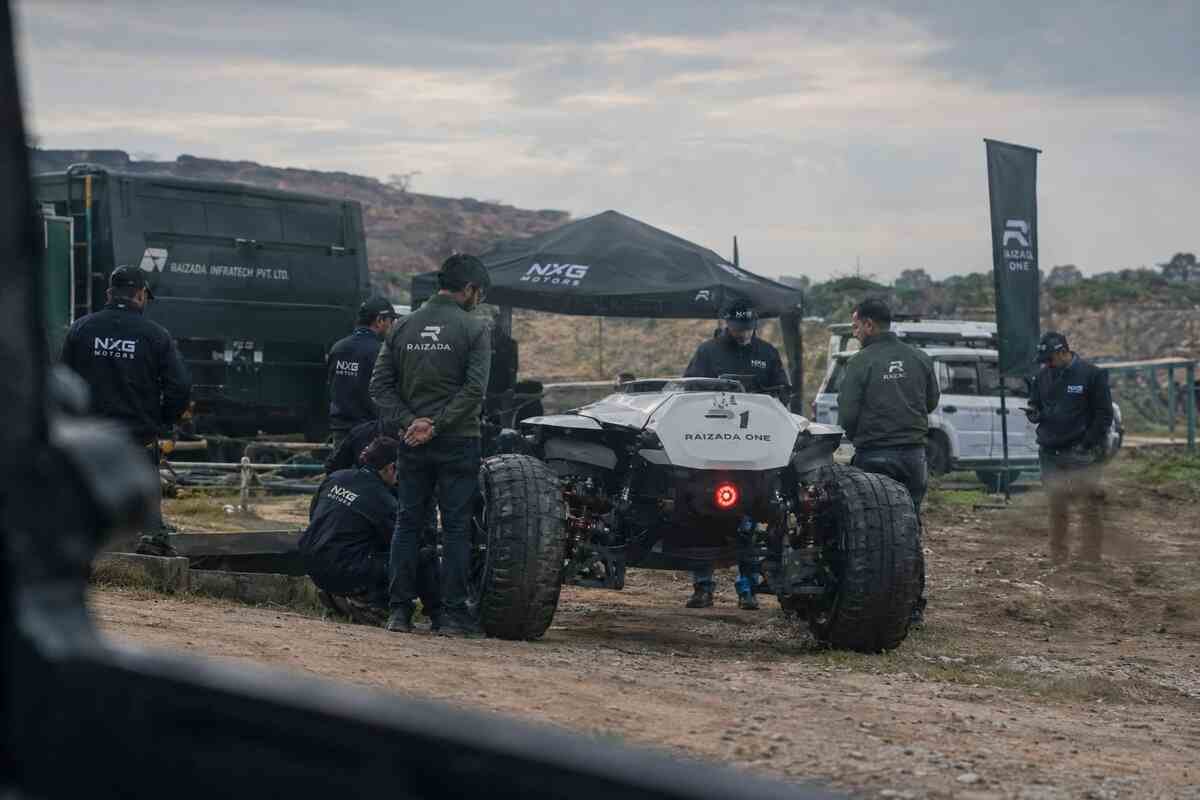
Inside NXG Motors’ ambitious mobility experiment, backed by Raizada One and led by Siliguri entrepreneur Arnav Singh Raizada. SILIGURI, WEST BENGAL — What happens when an entrepreneur looks beyond conventional automobiles and begins exploring a machine designed to transport goods across difficult terrain, support industrial operations and potentially assist security teams? At Raizada One, a business group associated with Siliguri, that question has taken physical form in a prototype known as NANDI.
Developed under NXG Motors, the group’s automotive division, NANDI stands for Next-gen Autonomous Navigation & Drive Infrastructure. The project represents an ambitious attempt to explore a multipurpose vehicle platform that could eventually serve transportation, logistics and specializedoperational requirements.
The Vision Behind NANDI
At the center of the initiative is Arnav Singh Raizada, an entrepreneur whose business interests extend across infrastructure, technology, mobility and consumer industries.
Raizada One, formerly known as Raizada Group, provides the broader corporate umbrella for these ventures. One of its associated businesses, Raizada Infratech Private Limited, was incorporated in 2018 and is classified in the motor-vehicle manufacturing sector, according to publicly available corporate records.
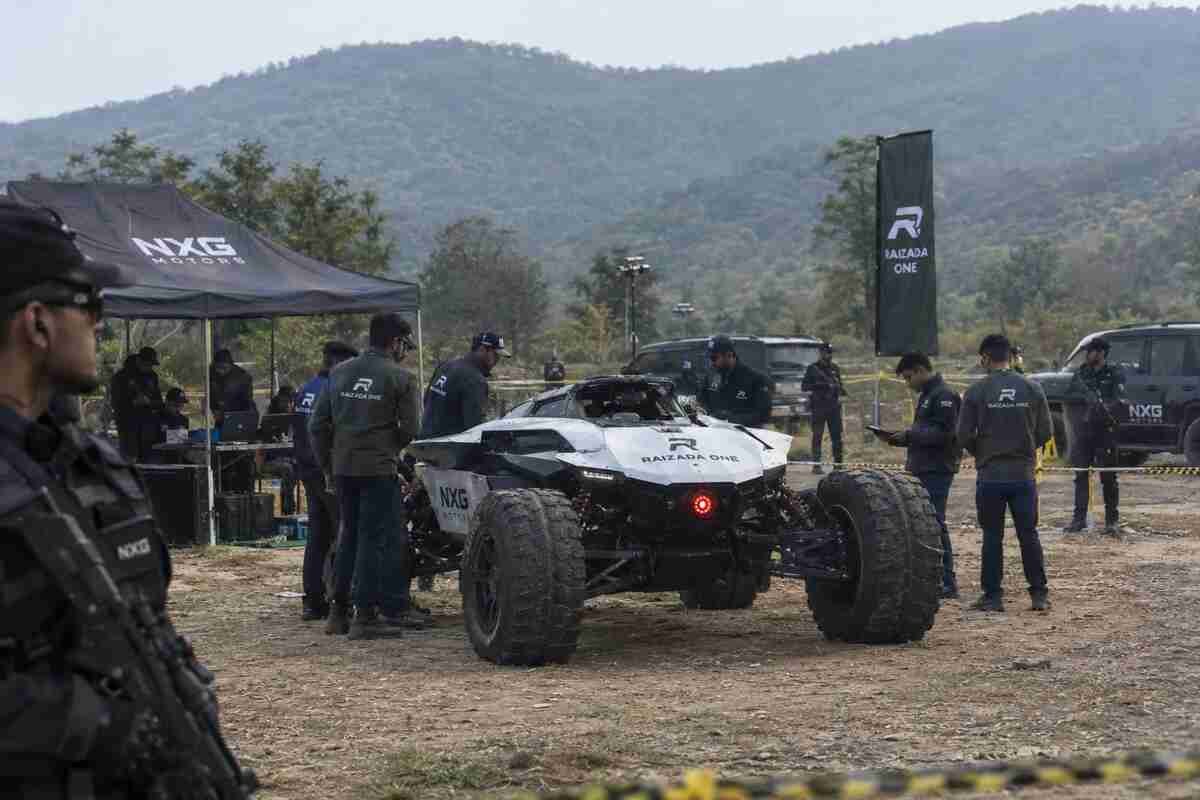
The group’s interest in mobility reflects a wider ambition: developing practical solutions that address operational challenges rather than limiting innovation to conventional consumer products.
According to information provided about the project, NANDI has been under development for approximately two to three years, with financial backing from the parent group. The prototype is now undergoing testing as its developers explore its potential capabilities and applications.
Engineering a Machine for Multiple Environments, NANDI’s unconventional appearance immediately distinguishes it from an ordinary road vehicle. Its angular body, oversized tyres and exposed chassis give it the visual character of a specialised off-road platform.
The concept is intended to explore goods transportation across both on-road and off-road environments. Potential applications include moving supplies through difficult terrain, supporting industrial logistics and transporting equipment within large premises.
The team also envisions possible security-related applications, including perimeter security and support for operations in challenging environments. Border-security applications have been identified as another potential area of interest, although any such deployment would require appropriate technical validation, regulatory compliance and operational authorisation.
Despite its name, the extent of NANDI’s autonomous capabilities has not yet been independently established. Its navigation, control systems, payload capacity, powertrain and operating range will ultimately determine how effectively it can perform its intended roles.
The People Behind the Project
An engineering experiment is only as strong as the people working to bring it to life. Alongside Arnav Singh Raizada, several individuals associated with the project include ShivanshChoudhary, Deepanshu, Alim Ahmed and DharamdevBiswakarma, together with other team members. Their involvement reflects the collaborative effort behind the prototype. As testing progresses, documenting the contributions of the people involved will be important to understanding how the project has evolved from an idea into a physical machine.
What Lies Ahead?
For NANDI to move beyond the prototype stage, several milestones remain. Engineering reliability, safety, payload performance, maintainability and operating costs will be central to determining its commercial viability. Public-road deployment in India would also require the relevant vehicle approvals, certification and registration. Its autonomous functionality, if applicable, would need to be demonstrated through appropriate testing.
For now, NANDI remains an experimental platform with a potentially broad range of applications. Its significance lies not in claims of a technological breakthrough, but in the ambition to develop a versatile mobility solution within India’s evolving engineering landscape. If the prototype can translate its design ambitions into proven performance, NANDI could become an interesting addition to the conversation around specialisedlogistics and next-generation utility vehicles.
For Raizada One and NXG Motors, the road ahead will be defined by engineering, testing and results. NANDI’s next chapter will depend on what the machine can demonstrate in the real world.