


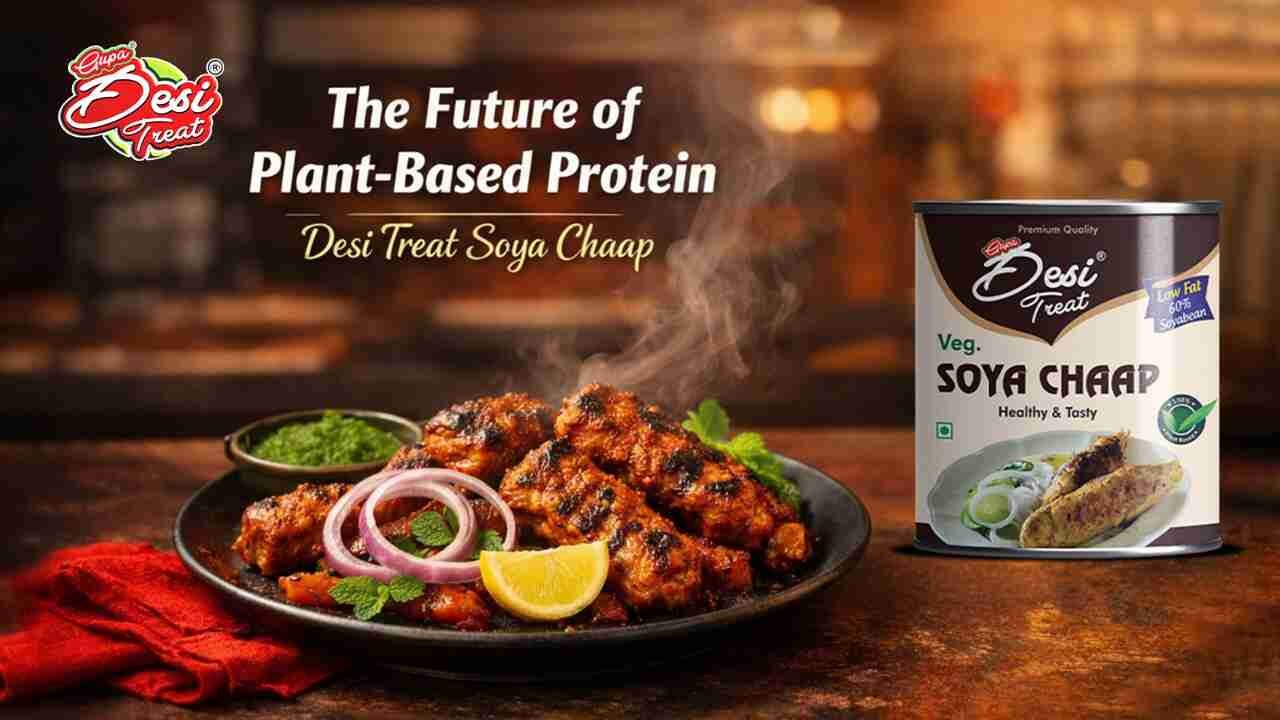
India’s evolving food economy has found a breakout hero in soya chaap, and Desi Treat is rapidly becoming synonymous with this high-demand category. Once a niche restaurant indulgence, plant based soya chaap has entered mainstream retail with force, transforming from street delicacy to pantry essential. As consumers increasingly search for pure soya chaap and real soya chaap options with assured quality, Desi Treat’s canned soya chaap is emerging as a front-runner in India’s plant protein surge.
The spike in demand is being driven by informed buyers who are actively checking soya chaap ingredients percentage, protein density, and manufacturing standards before purchasing. Transparency has become a decisive factor in the best soya chaap brand debate. Desi Treat has capitalized on this shift by delivering consistent texture, balanced seasoning adaptability, and reliable shelf stability through advanced packaging. The product caters to households, restaurants, and cloud kitchens seeking scalable, ready-to-cook protein solutions without compromising authenticity.
Unlike loose market variants, canned soya chaap ensures hygiene, longer shelf life, and uniform quality across batches. This controlled production system strengthens Desi Treat’s position not just as a retailer but as a leading soya chaap manufacturer with integrated supply capabilities. The brand’s infrastructure enables it to function seamlessly as a soya chaap supplier across multiple regions, meeting the surge in retail and HoReCa demand simultaneously.
Urban consumers are increasingly leaning toward protein-rich vegetarian alternatives as dietary awareness expands. Plant based soya chaap delivers versatility across cuisines, from creamy gravies to tandoori preparations and fusion wraps. Its ability to absorb spices while retaining structure has made it a chef favorite. With India’s protein consumption narrative intensifying, soya chaap is no longer a substitute product; it is now a centerpiece of modern vegetarian dining.
Search trends reflect this structural shift. Queries around pure soya chaap, canned soya chaap, and best soya chaap brand continue to rise as consumers actively compare labels and sourcing credibility. Desi Treat’s digital visibility and optimized product portfolio align precisely with these high-intent searches, strengthening brand recall in an increasingly competitive plant protein marketplace.
As India recalibrates its food priorities toward sustainability, affordability, and nutrition, soya chaap is evolving from alternative to essential. Desi Treat’s strategic focus on quality ingredients, supply consistency, and scalable distribution positions it at the forefront of this protein revolution. In a category once fragmented and unorganized, the brand is driving structure, standardization, and national expansion, signaling that the future of vegetarian protein retail may very well be anchored in canned soya chaap.