


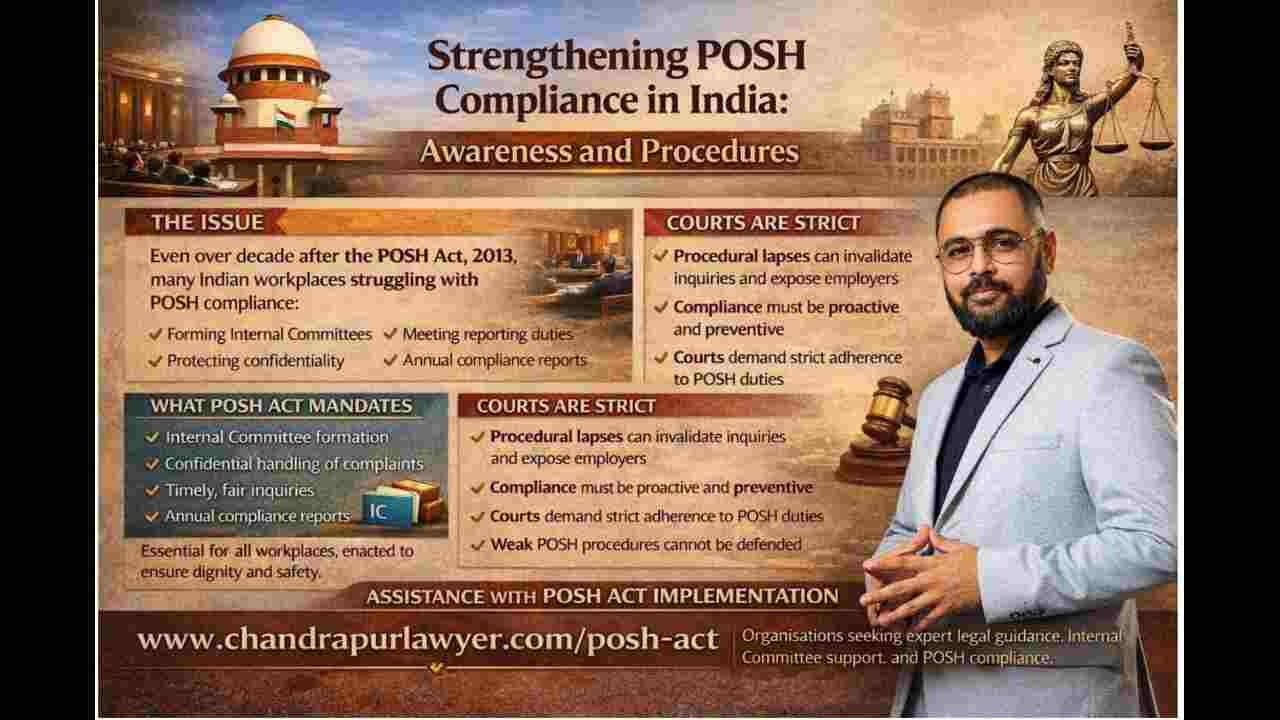
India: More than a decade after the Prevention of Sexual Harassment of Women at Workplace (POSH) Act, 2013 came into force, Indian workplaces continue to face challenges around awareness, implementation, and procedural discipline. Although the legislation was enacted to safeguard dignity, equality, and safety at work, legal experts and judicial authorities observe that compliance gaps remain widespread.
The law applies uniformly across sectors and organisational sizes. Government departments, private enterprises, educational institutions, healthcare facilities, non-profit organisations, and even remote or hybrid workplaces fall within its ambit. Yet, many employers continue to treat compliance as a reaction to complaints rather than as a preventive governance obligation.
Expanding Judicial Scrutiny on POSH Procedures
Recent judicial trends indicate that courts are taking a stricter view of procedural lapses under the POSH framework. The Supreme Court of India and various High Courts of India have consistently underlined that statutory requirements are mandatory, not optional.
Courts have emphasised that Internal Committees must be properly constituted, inquiries must follow prescribed timelines, confidentiality must be maintained, and principles of natural justice must be respected. Even when allegations are disputed, failure to follow procedure can significantly weaken an employer’s legal defence.
Why POSH Compliance Goes Beyond Written Policies
A common misconception among employers is that drafting a POSH policy fulfils their legal duty. In practice, the Act creates ongoing responsibilities. Organisations must ensure the lawful constitution of Internal Committees, conduct periodic awareness and training programmes, manage complaints through fair inquiry processes, and submit annual compliance reports to the appropriate authorities.
Judicial precedents show that inquiries conducted by improperly constituted or inadequately trained Internal Committees may be rendered invalid. Procedural defects—such as denial of a fair hearing or breach of confidentiality—often become decisive in litigation, exposing organisations to legal and reputational consequences.
Persistent Awareness and Implementation Gaps
Despite clear statutory guidance, many organisations remain uncertain about key aspects of compliance. These include the role of external members on Internal Committees, reporting obligations, and applicability in non-traditional or decentralised work environments.
Smaller organisations are particularly vulnerable, as they often assume that enforcement targets only large corporations. Legal practitioners note that many disputes reach courts not due to absence of policies, but because complaints are mishandled. In such cases, judicial focus shifts from the merits of the allegation to the flaws in the employer’s response.
Rising Need for Structured Legal Support
With employees becoming more informed and courts exercising closer oversight, organisations are increasingly seeking structured legal guidance on POSH compliance. Support is now sought not only for policy drafting, but also for training Internal Committee members and conducting inquiries that can withstand judicial scrutiny.
In this context, accessible digital legal resources play an important role. Platforms such as https://chandrapurlawyer.com/posh-act/ provide detailed explanations of statutory obligations, Internal Committee requirements, inquiry procedures, and compliance responsibilities under the POSH Act. Legal observers note that such resources help organisations understand the law proactively, reducing the risk of procedural lapses.
Contribution of Legal Practitioners to Compliance Frameworks
Legal professionals play a crucial role in strengthening POSH compliance systems. Nazim Khan, a practising advocate with experience in POSH matters, has assisted organisations in aligning internal practices with statutory standards. According to practitioners familiar with POSH litigation, early legal guidance often determines whether compliance frameworks hold up under judicial review.
“The POSH Act is preventive by design,” legal experts observe. “When organisations focus only on responding to complaints and neglect training, awareness, and procedure, they create avoidable risks. Proper compliance safeguards both employees and employers.”
Internal Committees, in particular, benefit from legal clarity. Without adequate guidance, committees may struggle with inquiry methodology, evidence assessment, and report drafting, leading to outcomes that may not survive judicial scrutiny.
POSH as an Element of Responsible Governance
Beyond statutory liability, POSH compliance is increasingly viewed as a marker of responsible organisational governance. Regulators, stakeholders, and employees are paying closer attention to how institutions address workplace dignity and safety.
Organisations with robust compliance frameworks are better positioned to manage disputes and maintain internal trust. Conversely, mishandled complaints can result in reputational damage, employee disengagement, and long-term institutional harm.
Looking Ahead: From Checklist to Culture
As workplace structures evolve and judicial expectations grow stricter, POSH compliance can no longer be reduced to a checklist exercise. Courts have made it clear that fairness, accountability, and respect for dignity lie at the heart of the law.
Sustained awareness initiatives, regular training, accessible legal information, and professional guidance together form the foundation of effective compliance. Organisations seeking clarity on POSH Act implementation, Internal Committee constitution, and inquiry procedures may refer to https://chandrapurlawyer.com/posh-act/ or consult experienced legal professionals such as Advocate Nazim Khan for advisory support.
In the years ahead, organisations that prioritise lawful procedure and institutional responsibility are likely to face fewer disputes—and stronger credibility—than those that do not.