

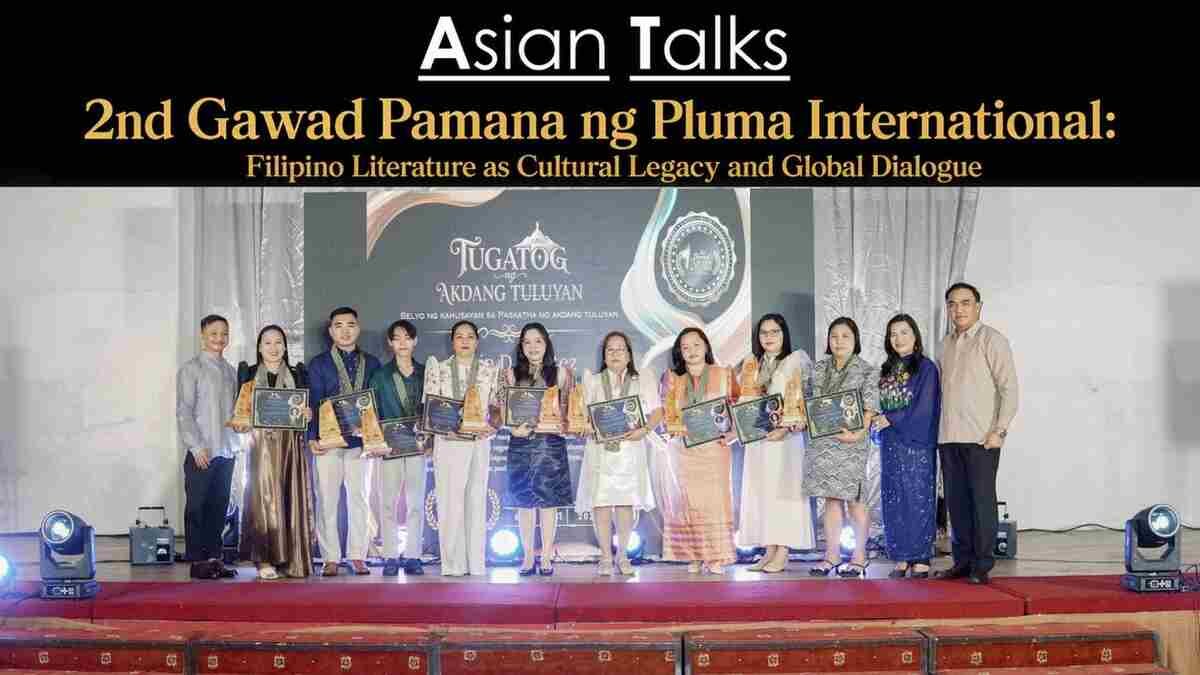
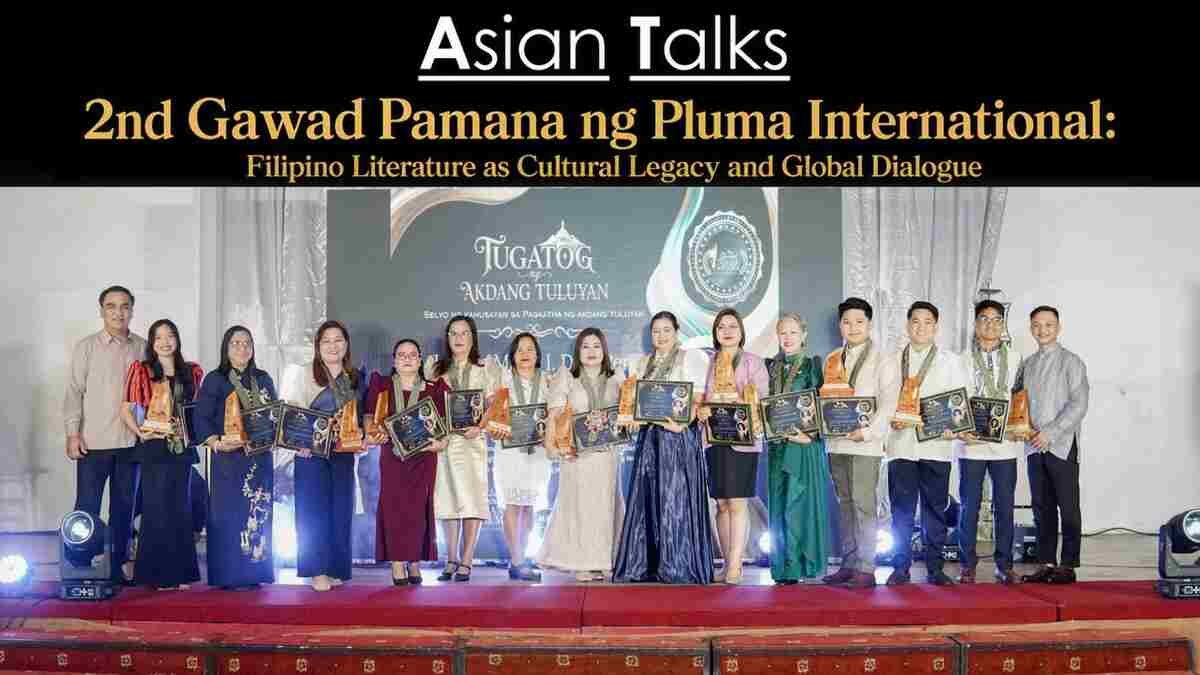
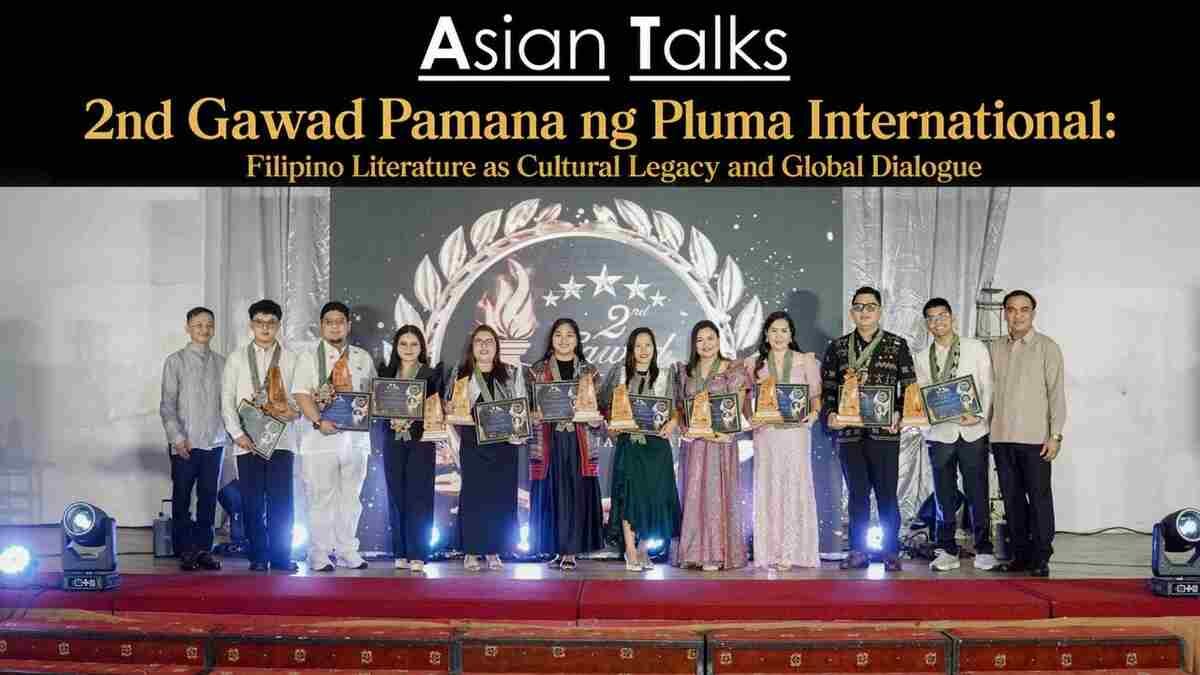
BAGUIO CITY, Philippines – Beneath the drizzles that blanketed the already chilling mountain city of Baguio on May 31, 2026, an altogether different atmosphere emerged within the Diamond Ballroom of the Supreme Hotel Convention Plaza. There writers, educators, scholars, artists, public servants, and cultural advocates gathered for the 2nd Gawad Paman ng Pluma International, an event that transcended the conventional boundaries of an awards ceremony and became a celebration of Filipino cultural identity itself.
As the Philippines continues to navigate the complexities of globalization, digital transformation, and linguistic diversity, the gathering offered a timely reminder that literature remains one of the most enduring instruments through which nations preserve memory, cultivate identity, and imagine their futures. Livestreamed through M.E Publications’ Facebook platform, the event reached audiences across the Philippine archipelago and among Filipino communities overseas, transforming a local gathering into an international cultural dialogue.
At its core, the 2nd Gawad Pamana ng Pluma International reaffirmed a conviction increasingly echoed by scholars and cultural practitioners worldwide: languages and literatures are not merely artistic pursuits. They are repositories of collective experience, vehicles of cultural transmission, and foundations of social cohesion.
A Celebration Rooted in Community
The event was organized through 5the collaborative efforts of the KApisanan ng mga Filipinong Awtor at Manunulat sa Pilipinas, Inc. (KAFAMPI), Association of Social Sciences Educators for Treasures and Traditions (ASSETT) of the Philippines, Inc., and M.E Publications, institutions whose partnership demonstrated the importance of collective stewardship in sustaining literary and cultural traditions.
The morning program opened with multilingual greetings delivered by host Adrian Fisga Luague, whose use of various Philippine languages symbolically reflected the linguistic richness of the nation. The gesture resonated deeply within a country that recognizes more than a hundred languages and dialects, each carrying unique histories, worldviews, and literary traditions.
From the outset, the ceremony emphasized inclusivity and cultural interconnectedness. Rather than positioning literature as an elite pursuit, the event framed it as a shared national inheritance accessible to communities across geographic, linguistic, and social boundaries.
This approach reflects a growing movement in the Philippine literary circles to broaden participation in cultural production while recognizing the diverse voices that contribute to the nation’s evolving narrative.
Honoring Excellence in Filipino Letters
A defining feature of the event was the conferment of the Gawad Tugatog ng Akdang Tuluyan (Seal of Literary Excellence in Prose Writing) and the Gawad Tugatog ng Panulaan (Seal of Literary Excellence in Poetry Writing).
Awarded only once every three years, these distinctions represent some of the most significant recognitions bestowed upon Filipino writers and poets. The rarity of the awards underscores their prestige and highlights the rigorous standards through which literary excellence is evaluated.
The recognition of writers reflected the remarkable breadth of contemporary Filipino literary production. Their achievements spanned genres, languages, and regions, illustrating the vitality of a literary tradition that continues to evolve while remaining grounded in cultural memory.
Throughout the proceedings, speakers underscored the role of literature in shaping public consciousness. Messages from M.E Publications Director Eleuteria “Helen” Sarita, and ASSET of the Philippines President Dr. Joseph Cristobal, along with a song number by the singing journalist Antonio Ma-at, known professionally as “Dream,” contributed perspectives that blended scholarship, advocacy, and artistic expression.
Their messages converged around a common theme: literature remains essential not only because it records experience but because it enables societies to interpret and reimagine that experience. Through stories, poems, essays, and critical reflections, writers help communities understand their past while navigating contemporary challenges.
Acceptance speeches delivered by Dr. Erlinda B. Tibus and Dr. Jennifer A. Gorumba further reinforced this perspective. Both speakers highlighted gratitude toward mentors, institutions, and fellow writers while emphasizing the responsibilities that accompany literary recognition. Their remarks reflected a broader understanding of authorship as both creative and civic undertaking.
Literature in the Digital Age
One of the most striking aspects of the gathering was its simultaneous physical and digital presence.
While attendees filled the ballroom in Baguio City, viewers from across the Philippines and abroad participated virtually through online broadcasts. This dual format illustrated how digital platforms are reshaping cultural engagement, enabling literary events to transcend geographical limitations.
For many Filipino communities living overseas, digital access has become an increasingly important means of maintaining cultural connections. Events such as the Gawad Pamana ng Pluma International serve not only domestic audiences but also members of the global Filipino diaspora seeking meaningful engagement with their linguistic and cultural heritage.
The livestreaming of the program reflected a broader trend in contemporary cultural practice: the fusion of traditional artistic forms with modern communication technologies. Rather than diminishing the significance of literature, digital platforms have expanded opportunities for literary communities to reach wider audiences and foster transnational conversations.
Heritage Beyond the Written Word
Although literature occupied the center of the event, the celebration also highlighted the interconnectedness of artistic forms.
The afternoon program hosted by Kenedy G. Flores and Jo Anne E. Kiniado, featured performances by the Kayaw di Umili Ensemble, whose presentations of Cordilleran dance traditions brought movement and music into dialogue with literary expression. Their performances served as a vivid reminder that culture is not confined to texts alone but is embodied through rituals, performances, and communal practices.
In many indigenous and local traditions throughout the Philippines, storytelling extends beyond the written page. Songs, dances, oral narratives, and ceremonial practices function as equally important vehicles of cultural knowledge.
The presence of the ensemble therefore expanded the event’s cultural scope, demonstrating that literary heritage exists within a larger ecosystem of artistic and communal expression.
Their performances energized the audience while reaffirming the importance of safeguarding intangible cultural heritage in all its forms.
Leadership and Cultural Service
The gathering also acknowledged the vital role of public service and institutional leadership in sustaining cultural initiatives.
Messages delivered by local government officials and community leaders emphasized the values of integrity, resilience, and service. Their participation reflected a growing recognition that cultural development is not solely the responsibility of artists and educators but also requires support from public institutions.
This perspective was particularly evident during the presentation of the Gawad Sulong Pamumuno, which honored leaders whose contributions have strengthened educational and cultural institutions.
Acceptance speeches by Atty. Robert John J. Doneza and Dr. Michele J. Dulay emphasized leadership as a form of stewardship. Rather than focusing exclusively on professional accomplishments, both speakers highlighted the importance of empowering communities, nurturing future generations, and creating opportunities for collective growth.
Their remarks echoed a broader theme present throughout the day: that cultural advancement depends upon collaboration among writers, educators, policymakers, and citizens.
Recognizing Emerging and Established Literary Voices
As evening approached, attention turned to the inaugural Pamana ng Pluma Literary Awards, which celebrated outstanding literary works in both Filipino and English.
The competition showcased the continuing diversity of contemporary Philippine literature, with recognized works exploring themes ranging from identity and memory to resilience and social transformation.
In the Filipino category, “Marka” by Princess S. Calacala received First Prize, while “Agunyas ng Amag” by Eugene Gebrielle A. Nacino earned Second Prize, and no winner for the Third Prize. Honorable Mentions were awarded to Jermaine Emil L. Unas’ “Salimuot sa Tasa ng Kape”, Jude Alexander M. Punzalan’s “Pagitan ng mga Tinig”, and Romeo G. Balonzo, Jr.’s “Mga Panaghoy ni Dumagat Remontado”.
In the English category, no winner for the First Prize, while “The Scarcity Beast” by Ena Marion D. Tuano received Second Prize, and “The Anatomy of a Sinking Chair” by Ma. Jenelle B. De Martin earned Third Prize. Honorable Mentions were awarded to Alberto C. Felisilda, Jr.’s “When Virtue is Silenced”, Vince Benedict A. Tanjay’s “The Remainder”, and Dave L. Rellanos’ “A Love So Blind”.
The recognition of works in both Filipino and English reflected the multilingual realities of Philippine literary production. It also highlighted the ability of Filipino writers to engage local experiences while participating in broader global conversations.
The Enduring Power of Cultural Recognition
The evening’s culminating honors included the presentation of the Gawad Sulo, recognizing individuals and institutions whose contributions have generated lasting impact across sectors and generations.
Among the recipients was KWF’s Chief Commissioner Atty. Marites A. Barrios-Taran, who received the Gawad Sulo sa Pagtaguyod ng Wika for her dedication to language preservation and advocacy. The Liwayway Magazine received the Gawad Sulo ng Panitikan, while SUC President Prof. Charisma S. Ututalum of Sulu State University, and University President Dr. Elbert Manangan Galas of Pangasinan State University were recognized through the Gawad Tanglaw ng Akademya for transformative educational leadership.
The presentation of the Gawad Uliran further underscored the event’s emphasis on exemplary service and lifelong commitment to excellence.
Collectively, these recognitions demonstrated that cultural development is sustained not by isolated achievements but by networks of individuals and institutions working toward shared goals.
A Living Inheritance
The event concluded with a communal dance led by the Kayaw di Umili Ensemble, transforming the ballroom into a space of shared celebration. Participants joined together in a symbolic expression of continuity, participation, and collective belonging.
As the final remarks echoed through the venue, a central message emerged with remarkable clarity: culture survives not because it is preserved in museums or archives, but because it is practiced, celebrated, and transmitted from one generation to the next.
The 2nd Gawad Pamana ng Pluma International demonstrated that literature remains far more than artistic discipline. It is a living inheritance capable of connecting communities, strengthening identities, and fostering dialogue across borders.
In Baguio City and throughout the digital networks that carried the event to global audiences, the celebration affirmed a timeless truth: to sustain the written word is to sustain the spirit of a people. Through voices, verses, and values, the legacy of the Filipino pluma continues to inspire, educate, and endure.
Featured Writer, Asian Talks:
The AFL (Adrian Fisga Luague) is a Filipino educator, writer, and independent scholar whose work focuses on culture, education, language, and literature. He is affiliated with M.E Publications and Blossoms Journal International Magazine.
Asian Talks Editor: Antonio Ma-at
International Journalist | Hellenic Media Group (HMG)