


Every business owner knows the feeling. A new lead appears on WhatsApp, a customer fills out a form on the website, or an enquiry comes in through an ad campaign. It’s the moment every business works towards. Yet, for many companies, that’s also where the problem begins. The customer is interested, but the response is delayed. The follow-up depends on someone remembering. Conversations get buried beneath dozens of notifications, and by the time a salesperson reaches out, the customer has often chosen a competitor who simply replied first.
Ironically, generating leads is no longer the hardest part of growing a business. Digital advertising, WhatsApp, and online discovery have made it easier than ever for businesses to attract potential customers. The real challenge is managing what happens after that first interaction. As businesses scale, so do the number of enquiries, follow-ups, reminders, and conversations. Sales teams become busier, not necessarily because they are selling more, but because they are spending more time managing the sales process itself.
For years, Customer Relationship Management (CRM) software has been the industry’s answer to this challenge. CRMs helped businesses organise customer information, track interactions, and manage sales pipelines. They became reliable systems of record, ensuring that nothing was forgotten on paper. But as customer expectations changed, the founders of The Next Door AI Pvt Ltd began to realise that remembering customers was no longer enough. Modern businesses didn’t just need software that recorded activity. They needed software that could actively move sales forward.
That realisation didn’t come from market research or a boardroom discussion. It came from lived experience.
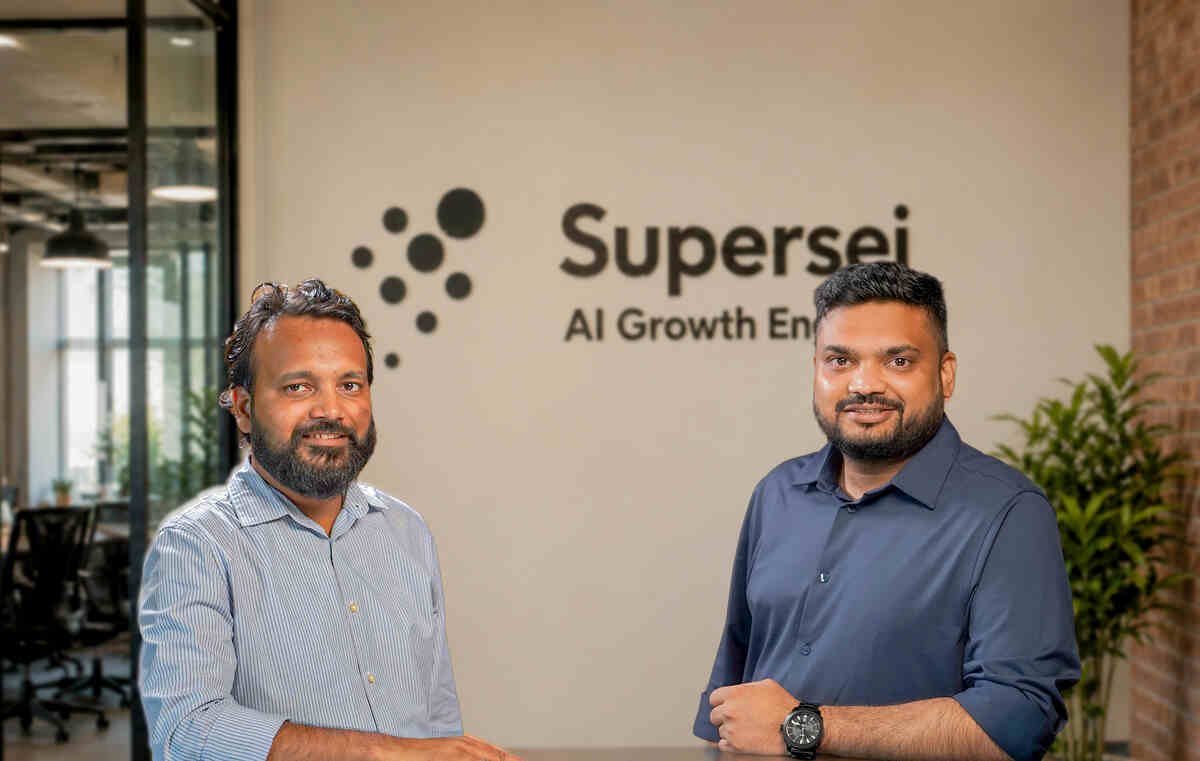
Co-Founders Kundan Kumar and Mrinal Anand have spent more than a decade between them working in sales and growth, both inside large organisations and while building their own B2C business. Like many founders, they reached a point where spreadsheets stopped working, and adopting a CRM became the obvious next step. They tried one platform after another, believing the next solution would finally solve their operational challenges.
Instead, every platform seemed to create a new frustration.
Some tools had years of credibility behind them but felt rigid and built for a different era of business. Others offered modern interfaces and promised innovation but lacked the depth required to support growing sales teams. Despite switching platforms multiple times, the same problem remained. Every CRM stored customer information, but every important action still depended on people. Someone still had to respond to a WhatsApp enquiry.
Someone still had to remember the follow-up. Someone still had to schedule the meeting, send the reminder, and keep the conversation alive.
The founders weren’t looking to build software at that point. They were simply trying to make their own business run better.
As they worked through these daily frustrations, one question kept coming back: if artificial intelligence can solve far more complex problems today, why are businesses still manually responding to leads, chasing follow-ups, and updating CRM records?
Rather than waiting for someone else to answer that question, they decided to build the solution themselves.
Initially, the platform wasn’t intended to become a commercial product. It was built for their own use case, around the exact workflows their business followed every day. The goal wasn’t to replace people, but to remove the repetitive tasks that stopped people from doing their best work. Instead of simply recording customer interactions, the platform responded to enquiries, qualified leads, scheduled meetings, followed up automatically, and kept conversations moving even when the team wasn’t available.
The difference was immediate.
The founders found themselves spending less time managing software and more time building relationships with customers. Sales conversations became faster, follow-ups became consistent, and opportunities stopped slipping through the cracks. It solved the problem they had been trying to fix for years.
That internal solution eventually became Supersei.
Rather than positioning it as another CRM, Kumar and Anand describe Supersei as an AI Growth Engine. The distinction is intentional. Traditional CRMs were designed to record what happened. Supersei was designed to influence what happens next.
At the centre of the platform is Sei, the company’s AI sales representative. Sei responds to enquiries within seconds, qualifies prospects, follows up automatically, books meetings, and even shares payment links. While human teams focus on conversations that require empathy, trust, and decision-making, Sei takes care of the repetitive work that often slows the sales process.
The platform captures enquiries from websites, Meta Ads, Google Ads, WhatsApp, inbound calls, and other channels into a single workflow. It also integrates with Gmail, Google Calendar, Google Meet, Razorpay, Stripe, and the communication tools businesses already use every day. The objective isn’t to ask businesses to change how they work. It’s to make the way they already work significantly more efficient.
For Kundan Kumar, the idea behind Supersei has always been simple.
“We spent years inside large companies using CRM after CRM, and every one did the same thing. It remembered the customer but never won them. A CRM was built to store a lead and wait for a human to act, and in a market where people buy at 11pm on WhatsApp, waiting is how you lose. We built Supersei so the reply, the follow-up and the booking happen on their own, and a person steps in only where a person truly matters.”
That philosophy has already translated into measurable business outcomes. According to the company, one early deployment with a fast-growing AI job-tech business handling approximately 5,000 leads per month through a team of 20 sales agents saw average first response time reduce from six hours to under one minute within a single quarter. Lead conversion increased from 5 percent to 20 percent, nearly 90 percent of follow-ups were automated, and conversations handled per agent rose from 30 to 100 per day without increasing headcount. Return on ad spend improved from 3x to 7.5x, while cost per lead reduced from ₹50 to ₹17.
For Mrinal Anand, those numbers simply reinforce a broader shift taking place across the industry.
“In India most sales happen on WhatsApp and most leads are paid for with ad money. When a business takes six hours to reply, that money is already gone. We have seen a team cut first response from hours to under a minute and take conversion from 5 percent to 20 percent without adding a single person. That is the difference between a tool that records your sales and one that drives them.”
The founders believe artificial intelligence is changing the role software plays inside businesses. For decades, companies expected CRM systems to organise customer information. Increasingly, they believe businesses will expect software to take action, automate routine work, and actively contribute to growth rather than simply recording it.
For Kumar and Anand, Supersei is not the result of identifying a market opportunity from a distance. It is the product of solving a problem they experienced every single day while trying to grow their own business. They weren’t building software for someone else’s pain. They were building the tool they wished they had all along. Everything that followed, including turning it into a product for other businesses, came after that.