


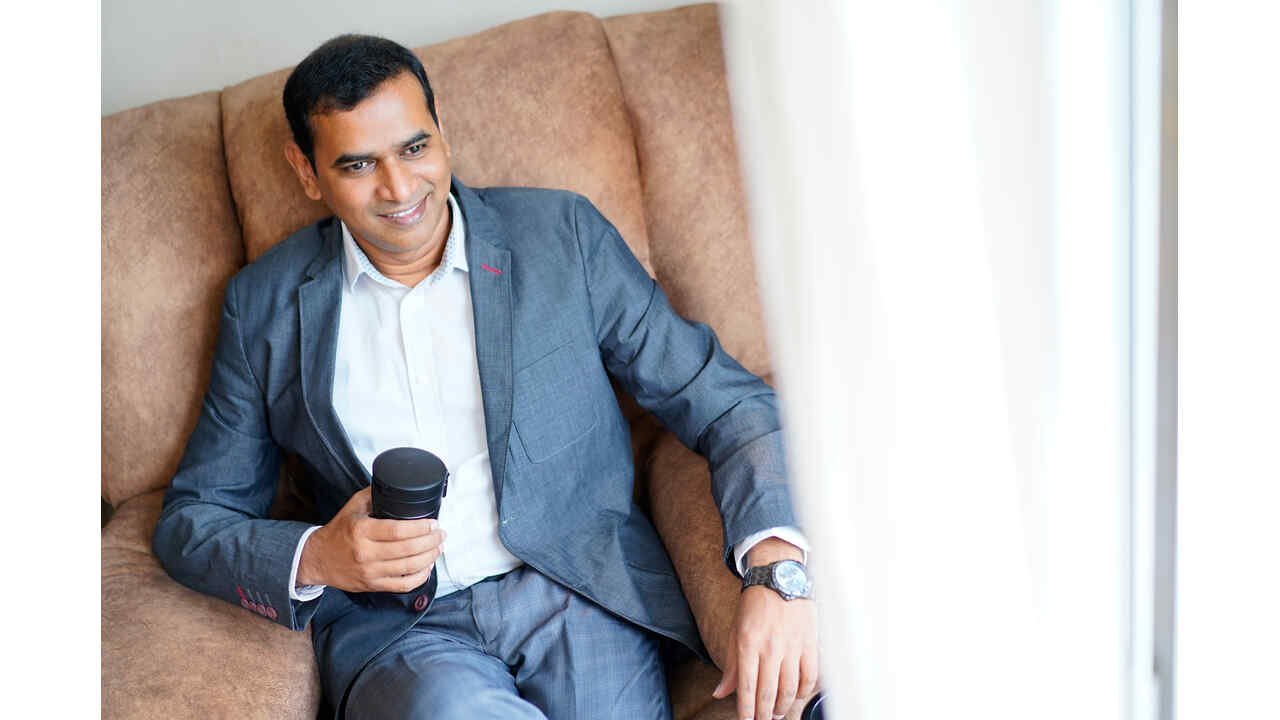
Business Consulting | Growth Systems: In India’s evolving business landscape, many companies do not fail in obvious ways. They survive. They operate. Some even grow—until they reach a point where progress slows and complexity increases. Revenue may rise, but stress rises faster. Founders remain deeply involved in every decision, and despite effort, the business refuses to scale.
This is the space where Raja Pantham has spent years working—inside businesses that aspire to grow but struggle to move beyond a certain stage.
Unlike conventional consultants or public-facing business coaches, Raja’s work is shaped by prolonged engagement with real operating environments: offices where decisions depend on one person, warehouses without defined systems, sales teams driven by individual effort rather than process, and founders managing everything from hiring to pricing to customer escalation.
The invisible bottleneck inside growing businesses
Across sectors, Raja observed a consistent pattern. Businesses were not limited by demand or intent, but by structure.
Hiring happened reactively, often driven by urgency rather than design. Roles overlapped or remained undefined. Sales depended heavily on a few individuals. Operations relied on experience instead of documentation. Pricing and discounts were decided emotionally. Expansion plans were initiated before internal readiness was established.
What many founders perceived as a “market challenge” was often an internal constraint.
At this stage, business owners frequently turned to external solutions—webinars, workshops, courses, and popular frameworks. While these offerings provided motivation and vocabulary, they rarely translated into sustained change. The reason, Raja found, was straightforward: generic frameworks rarely survive real-world execution.
Knowledge without context does not create scale.
A hands-on philosophy of business consulting
Raja Pantham’s consulting approach evolved as a response to this gap. Rather than positioning himself as an advisor who delivers reports or recommendations, he adopted a deeply hands-on model focused on execution.
His engagements typically begin with observation. Time is spent understanding how decisions flow, how teams interact, where delays occur, and where accountability breaks down. The objective is not to redesign everything, but to identify the few constraints that are limiting growth.
From there, the work becomes practical and comprehensive:
- Designing team structures aligned with the business stage
- Supporting hiring with clearly defined roles and expectations
- Training sales teams on real scenarios rather than theory
- Establishing follow-up and conversion discipline
- Aligning marketing activity with sales outcomes
- Streamlining operations and warehouse workflows
- Reviewing production realities and cost structures
- Correcting pricing and discount logic
- Assessing readiness for portfolio or geographic expansion
Raja views businesses as integrated systems. Fixing one function in isolation rarely delivers lasting impact.
Why founders proceed cautiously
Many founders who approach Raja do so after multiple failed attempts to “fix” their business. They are not resistant to help, but cautious. They have invested time and money into solutions that sounded effective but failed to address their specific realities.
Raja’s practice reflects this understanding. He works with a limited number of businesses at any given time, prioritizing depth over volume. Engagements are exclusive, goals are realistic, and progress is measured through execution rather than presentation.
Over time, founders observe tangible shifts.
Decisions become less dependent on the owner.
Teams gain clarity and accountability.
Sales becomes more predictable.
Operations stabilize.
Growth begins to feel structured rather than chaotic.
The transformation is gradual, but durable.
Building scale from the inside out
Raja Pantham’s work is not centered on visibility or mass adoption. It is built on continuity, trust, and long-term involvement. His belief is simple: many businesses already possess the potential to grow. What they lack is structure.
By addressing this gap quietly and consistently, Raja continues to help organizations move from founder-dependent operations to system-driven growth.
In an ecosystem often drawn to speed and spectacle, his work serves as a reminder that sustainable scale is rarely loud. It is built patiently, from the inside out.
You can know more about Mr. Raja Pantham on www.rajapantham.com