

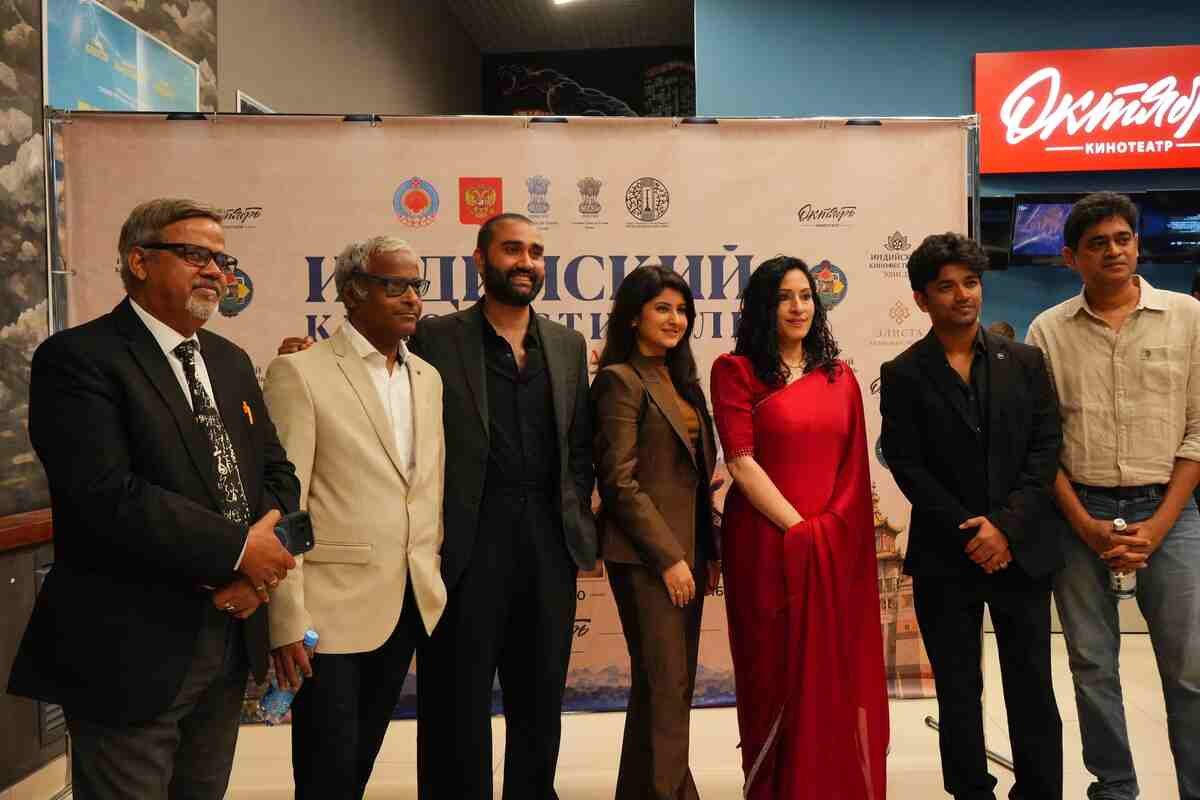
From May 10 through May 12, Elista, the capital of the Republic of Kalmykia, hosted the Days of Indian Culture. The initiative united the people from Russia and India through educational, sporting and cultural events.
Those who visited the screenings at the Oktyabr Cinema discovered the latest trends in Indian cinema and learned about filmmaking traditions first-hand.
The Days of Indian Culture came to a close on May 12 in Elista: the capital of the Republic of Kalmykia welcomed 130 representatives of India. They introduced the locals and the visitors to the rich ancient culture of India. A series of screenings at the Oktyabr Cinema were a major part of the program: from May 10 through May 12, three award-winning films were shown, and their creators shared the details of what was there behind the scenes.
Director Aranya Sahay, who is attuned to the drastic changes in the global sociocultural context, gained worldwide recognition for his debut feature film “Humans in the Loop”. The film tells the story of a single mother from the Oraon (Kurukh) tribe who trains AI systems along with tracing her roots. It explores how new technologies shape human lives. The film is based on an article “Human Touch” by Karishma Mehrotra published in 2022. The film received the Academy Award for Best Original Screenplay (2026), after becoming widely available on Netflix.
Aranya Sahay, the director of the film “Humans in the Loop”: “ The film, Humans in the Loop, screened in Elista, and it was deeply moving as an artist to arrive in a land and culture that has profoundly shaped my cinematic and philosophical imagination. Some of the most significant influences on me during my early years in film school were the Russian masters – Andrei Tarkovsky, Elem Klimov, and Sergei Eisenstein. To present a film exploring AI, labour, and tribal philosophy in Elista felt especially powerful. What moved me even more was witnessing audiences connect so deeply with the film’s emotional core and its philosophy of coexistence – something profoundly resonant with Buddhist thought and the cultural spirit of the region. We received an incredibly warm reception, and the post-screening conversations with the people of Elista were generous, thoughtful, and unforgettable.”
The social drama “A Bride and a Groom” is about the life in rural communities, where daily challenges often go unnoticed from the “outside”. Shot in the Odia language, the film shows the two friends striving for a better life, who get caught up in the schemes of local authorities and businessmen. To get a decent job, they have to enter into a sham marriage. The cast includes Sivani Sangita, an actress known for films in the Odia language and her mastery of traditional Indian dance. Her film credits include Sister Sridevi (2017), Bidyarana (2022), Chi Re Nani (2025) and Malyagiri (2023). The film is directed by Beeswaranjan Pradhan, who often explores whether social well-being is possible for the most vulnerable social groups.
Sivani Sangita, actress: It is a great honor for me to visit the Republic of Kalmykia as part of the Days of Indian Culture. I sincerely believe that there are no borders or barriers between our people and cultures. I was happy to present the film in the Republic of Kalmykia and to see how the new audience familiarizes itself with our work.”
The film “Water” directed by Adinath Kothare praises the energy of individuals willing to fight for the common good even if they are alone. The story is based on the real life of Hanumant Khendre, an activist who works tirelessly to improve water supply in his drought-stricken village. The director himself starred in the film. This touching story about the immense power of an ordinary person became a hit, winning at the National Film Awards and getting six Filmfare Awards Marathi. It also gained international recognition as the Best Environmental Film at the New York Wild Film Festival.
The Days of Indian Culture were first held in Elista from May 10 through May 12 at five venues. The visitors enjoyed concerts, workshops, lectures, and traditional Indian cuisine. Indian goods were also sold, and sporting competitions were held. In previous years, the Days of Indian Culture were held in Kazan and Tula, and Moscow hosts such events annually.